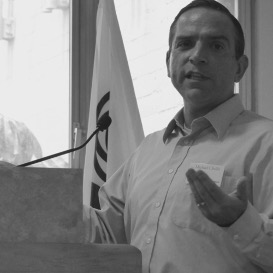
Michael Cholbi (Edinburgh) / Louise Richardson (York)
The 2026 Joint Session of the Aristotelian Society and the Mind Association
The University of Reading, 8th to 10th July 2026.
Symposium II Devotion and the Opacity of Grief
Michael Cholbi
Edinburgh
Louise Richardson
York
Abstracts
Grief is typically an epistemically opaque experience, such that the character of any given grief episode cannot be predicted in advance. We might wish otherwise, on the grounds that were grief not epistemically opaque, we could bring to bear extant knowledge about grief to mitigate or eliminate the suffering associated with it. Surprisingly, we should be glad that grief is epistemically opaque. For were it not, the devotion that lends much of our central personal relationships their importance would be undermined.
According to Michael Cholbi, the experience of grief is opaque, in that one cannot in principle know what it is like to experience grief without grieving oneself. If grief were opaque, some philosophical and practical grief-related projects might seem doomed to fail. Thus, I set out to assess whether certain features of grief—such as its unpredictability, bewilderingness, and surprisingness—support the claim that grief is opaque. I argue that relevant arguments for grief’s opacity do not succeed and that, more generally, the idea of opacity does not offer the best way to understand the sense in which it is difficult to grasp what the experience of grief is like.
About
Michael Cholbi is Professor and Personal Chair in Philosophy at the University of Edinburgh. He is the founder of the International Association for the Philosophy of Death and Dying. His essay “Empathy and Psychopaths’ Inability to Grieve” was awarded the 2022 Royal Institute of Philosophy Essay Prize. Other recent publications include Grief: A Philosophical Guide (Princeton University Press, 2021), “Grief as Attention” (Journal of Consciousness Studies, 2022), “The Rationality of Suicide and the Meaningfulness of Life” (Oxford Handbook of Meaning in Life, 2022), “Grief as a Duty of Practical Fidelity” (Free & Equal, 2025), “Memory and Mimesis in our Relationships with Posthumous Avatars” (Oxford Intersections: AI and Society, 2025), and the Oxford Handbook of the Philosophy of Suicide (2026).
Lucy Allais is jointly appointed at the University of the Witwatersrand, Johannesburg, and Johns Hopkins University. She got her D.Phil. from Oxford, had her first job at Sussex University, and has also worked at the University of California, San Diego. She has published extensively on Kant’s first Critique, primarily on his transcendental idealism and issues to do with the nature of intuition in his account. More recently she has been working on his political philosophy, including thinking about the nature of markets and common resources. She also has interests in moral emotions, in particular, forgiveness. She is currently working on human free agency.