Symposium IV – Hylemorphism as a Generalised Research Programme
David Oderberg (Reading) / Tuomas Tahko (Bristol)
The 2026 Joint Session of the Aristotelian Society and the Mind Association
The University of Reading, 8th to 10th July 2026.
Symposium V -Hylemorphism as a Generalised Research Programme
David Oderberg
Reading
Tuomas Tahko
Bristol
Abstracts
Hylemorphism as a Generalised Research Programme. Hylemorphism holds that material substances are composites of prime matter and substantial form: matter as pure potentiality, form as the actualising and specifying principle. After early modern attacks, recent work has revived hylemorphism chiefly as a theory of substance. This paper extends the project: hylemorphism can function as a general research programme for sublunary phenomena beyond substance ontology. I sketch, analogically, how form/matter analysis illuminates: (i) language, via a unified linguistic form rather than separate syntactic and semantic forms; (ii) ethics, treating bodily motion as matter and volitional states as form; and (iii) politics, understanding the polis as constitutionally informed matter. I conclude by rejecting attempts to reduce form to structure.
Unifying Kinds without Hylemorphism. David Oderberg has recently extended classical Aristotelian-Thomistic hylemorphism beyond traditional substance ontology to analyse linguistic, ethical, and political kinds. Whilst this project identifies important structural features of these domains, I argue that his hylemorphic apparatus is unnecessary. Drawing on the ‘Unification Principle’ (UP) account of natural kinds, I demonstrate that Oderberg’s insights can be captured more parsimoniously and with greater empirical constraint. I further argue that the mind-independence criterion for natural kinds applies to the unification principles themselves rather than to the kinds directly, allowing this framework to accommodate social and linguistic entities. The UP approach thus handles Oderberg’s case studies effectively whilst avoiding the metaphysical commitments and structural problems associated with hylemorphism.
About
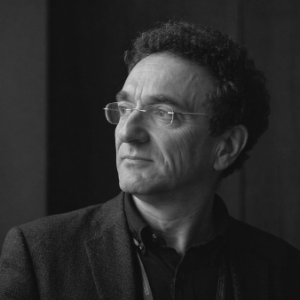
David S. Oderberg is Professor of Philosophy at the University of Reading and the author of six books including Real Essentialism (2007) and The Metaphysics of Good and Evil (2020), as well as editing or co-editing several others in logic, metaphysics, and ethics, including Classifying Reality (2013). He is also the author of over eighty articles in metaphysics, philosophy of biology, ethics, philosophy of religion, and other subjects. In 2013 Professor Oderberg delivered the George Hourani Lectures at SUNY Buffalo, in 2023 he delivered the annual E.J. Lowe Lecture at the University of Durham, and in 2024 both the Annual Aquinas Lecture at the University of St Thomas, Houston (where we was awarded the Aquinas Medal), and the Henle Memorial Lecture at the University of St Louis. His forthcoming book is Investigating Biological Mistakes (Springer Nature, 2026).
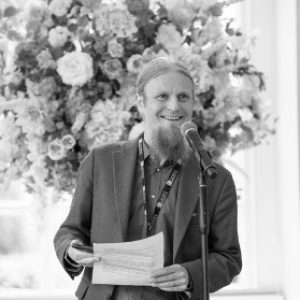
Tuomas Tahko is Professor of Metaphysics of Science at Bristol. He specialises in contemporary analytic metaphysics, with an emphasis on methodological and epistemic issues: ‘meta-metaphysics’. He also works at the interface of metaphysics and philosophy of science: ‘metaphysics of science’. Broader research interests include specific issues in philosophy of science (physics, chemistry, biology), issues in epistemology, philosophical logic, philosophy of computation, philosophy of mind, and history of philosophy. Tahko is the former PI of the ERC Consolidator Project MetaScience, 2018-23, and former Editor of Cambridge Elements in Metaphysics (2020-25). He is the editor ofContemporary Aristotelian Metaphysics (2012), and author of An Introduction to Metametaphysics(2015) and Unity of Science (2021). Currently, he is also Head of School of Arts at Bristol.