
2025-6 Postgraduate Session

Feeling Like Myself. What is it that makes us feel like our bodies are ours? Where do feelings of bodily ownership come from? Rather than undertake a detailed criticism of the various philosophical approaches to answering these questions, I will propose a scientific answer which broadly supports Conventionalism. I will argue that an emerging field in cognitive neuroscience, the study of interoception, tells us how we come to believe that we have the bodies and body parts that we do. I argue that we directly perceive which bodies and body parts are ours and we only have the bodies and body parts we believe we do, but these beliefs are grounded by objective facts about our nervous system.
Aesthetic Cognitivism and Understanding. Aesthetic (neo-)cognitivism makes two claims: art has epistemic value, and that epistemic value can contribute to its artistic value (that is, its value as art). Aesthetic cognitivists take that epistemic value to be ‘propositional’ knowledge’, whereas, in response to various objections, aesthetic neo-cognitivists take it to be ‘understanding’. However, I will argue that the shift to understanding cannot be made as straightforwardly as aesthetic neo-cognitivists would like. Given their aim of moving away from propositional knowledge, I do so by focusing on the question of whether propositional knowledge is necessary for understanding (‘standard non-reductionism’) or whether it is not (‘strong non-reductionism’). I argue that aesthetic neo-cognitivists who are also standard non-reductionists typically appeal to understanding which is of trivial epistemic value and cannot contribute to artistic value. And whilst strong non-reductionist aesthetic neo-cognitivists do appeal to understanding which could plausibly contribute to artistic value, they deny that the epistemic value of that understanding can be cashed out in terms of truth, thereby calling the supposed epistemic value they appeal to into question.
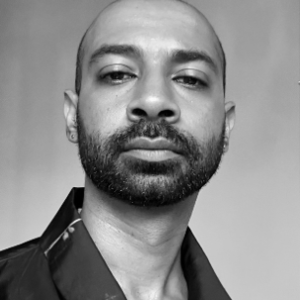
My name is Arjun Devanesan and I am an Intensive Care Physician practicing in London. I am also a Garden Fellow of the Royal College of Physicians where I do research on the history of medicine and plants. I have just finished a PhD in Philosophy at King’s College London on the mereology of pregnancy. Through this, I developed an interest in the philosophy of biology and metaphysics in addition to philosophy of medicine. I am currently a Visiting Research Fellow in the Philosophy Department at King’s College London.
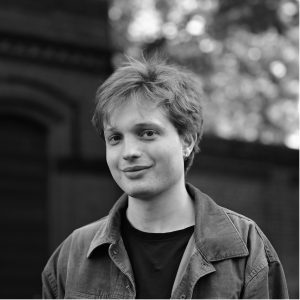
Lucy Psaila is a first-year PhD student at University College London. Her research interests lie at the intersections of philosophy of art, philosophy of mind, and moral philosophy. Currently, her research focuses on the epistemic value of art, its connection to the imagination, and the ways in which it can help us understand other people. She also has a secondary research interest in theoretical ethics, and is working on a paper about transformative choice and the non-identity problem. Prior to her PhD, she completed the MPhilStud in Philosophy at UCL and a BA Philosophy and Linguistics at Somerville College, University of Oxford. Her research at UCL is funded by a Keeling Scholarship, and is primarily supervised by John Hyman.

(Oxford)
Bisexuality without Biconditionality. Standard markers of sexual orientation often come apart. Agents may identify as straight while reporting exclusive same-sex attraction and living in heterosexual relationships. Such cases motivate a metaphysical question: what, if anything, makes it true that someone is homosexual? This paper addresses that question by developing Phenomenal Nonconditional Dispositionalism. I begin by highlighting that the prevailing biconditional dispositional views face two structural obstacles: First, no specification of stimulus conditions can be both non-arbitrary and extensionally adequate; and second, they are unable to accommodate gradable understandings of sexuality. I then object to categorical alternatives to dispositionalism because they deliver counterintuitive results for: unmanifested orientations (Tarzan cases), diachronic change (Clive cases), and the phenomenology of sexual self-discovery (Ludwik cases). Each of these supports the intuition that orientations are, in some sense, dispositional. By drawing on Vetter’s nonconditional account of dispositions, I develop Phenomenal Nonconditional Dispositionalism (PND). On PND, to have an orientation towards Y is to be easily sexually aroused by Y. PND preserves the modal motivations for dispositionalism, while dissolving the two challenges faced by biconditional accounts.
The Weight of Evidence, Epistemic Luck and Ambiguity Aversion. I show that credence backed by weightier evidence is not only more resilient to challenging evidence learned in the future but also more resilient counterfactually. Even if the evidence had been different in the past, such credence would have changed by a relatively small margin. I further show that such counterfactual resilience amounts to being less susceptible to a particular kind of epistemic luck—evidential-doxastic luck. We can utilise the susceptibility to evidential-doxastic luck to rationalise a kind of ambiguity aversion that cannot be otherwise rationalised. It can be rationalised as expected utility maximisation not relative to a set of probability functions in the actual world but relative to a set of probability functions across the specified close possible worlds.
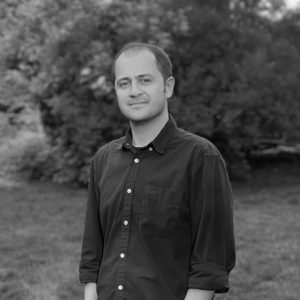
Lukas Joosten is a DPhil candidate in Political Philosophy at Nuffield College, Oxford. His work lies at the intersection of analytic political philosophy, ethics, and social metaphysics. His doctoral research, supervised by Professor Daniel Butt, examines normative powers over time: in particular, how and when agents can irrevocably consent on behalf of their past and future selves. It argues that diachronic persons, rather than person-stages or temporal parts, are the proper bearers of normative powers. The paper presented here forms part of a broader side project in social ontology, concerning the metaphysics of sexual orientation and gender.
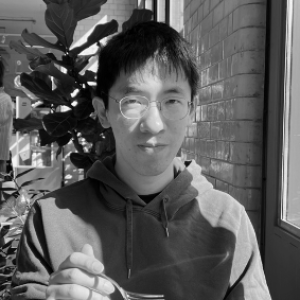
Zhongwei Xu is a PhD candidate at the London School of Economics, supervised by Prof Richard Bradley and Prof Anna Mahtani. His main research interest lies in decision theory and epistemology. He is particularly interested in how we should form our belief when the evidence at our disposal is less than ideal and how we should make decisions based on such belief. He also has broad interest in philosophy of mind, philosophy of (social) science and philosophy of language. His most recent projects concern how the stakes affect our decision making and the relation between higher-order evidence and unspecific evidence.

The Global Collective Agent. Realists hold that global justice is permanently unreachable because a global sovereign is impossible to establish. In this paper, I contest this modal claim by providing an account of how to constitute a global sovereign, which I call the Global Collective Agent (GCA). To do so, I adopt Philip Pettit’s theory of collective agency. His theory is particularly well suited to explaining collective agents that pursue specific ends. It can be condensed into three conditions that any group must satisfy to constitute a collective agent: purposive flexibility, individual acquiescence, and a guiding voice. Given the immense scale of a global group and the conflicting interests of its constituents, these conditions cannot be straightforwardly satisfied. Therefore, I develop three scalar desiderata tailored to constituting collective agency on a global scale. First, ‘operative states’ function as the authorised agents whose decisions and actions constitute those of the GCA. Second, a ‘global ethos’ comprises collectively accepted goals, values, and norms that provide operative states with motivating reasons for action. Third, ‘global institutions’ are established de novo with the legislative, executive, and judicial capacities through which operative states bind themselves. I argue that these desiderata, when progressively satisfied, can constitute the Global Collective Agent capable of enabling global justice.
Reasons and Resentment: Why the Reactive Attitudes Don’t Support Internal Reasons Theory. Can I have a reason to perform some action, even if no amount of reasoning would motivate me to so act? Externalists answer yes; internalists answer no. In the last decade or so, Kate Manne (2014) and Gerald Gaus (2010) have proposed a new rationale for internalism: namely, that internalism is supported by our practices involving the reactive attitudes. This is an important defence of internalism. But it has not yet been properly assessed. In this paper, I provide such an assessment, and conclude that the argument falls at the first hurdle. This is because reactive attitudes-based arguments for internalism rely on a shared premise: that someone is liable to the reactive attitudes in response to his action only if he could, through reasoning, reach a motivation to act otherwise. This premise is false. Thus, internalists must look elsewhere for their motivating rationale; appealing to the reactive attitudes does not support internalism over externalism.
Ahmet Gönüllü is a PhD candidate in Philosophy at Bilkent University, where his doctoral research is supervised by Bill Wringe. His broader interests are in ethics, political philosophy, social ontology, and criminal justice. In his dissertation, Gönüllü examines a distinctive position, that of an agent who contributes to a group harm, faultless or not. He asks what affective, moral, and criminal responses such a position warrants. In 2025, he was a visiting doctoral researcher at the University of Vienna, on a TÜBİTAK International Research Fellowship and an Ernst Mach Grant–worldwide from the OeAD, and in 2024, he was selected as a Global Fellow of the ASAP Fellowship Programme at Yale University. Prior to his doctoral studies, he completed an MA in Philosophy at Erasmus University Rotterdam on a Holland Scholarship, and before that, he read Philosophy with a minor in Political Science at Bilkent.
Cara Addleman is a first-year PhD student at the University of Oxford, supervised by Thomas Sinclair. Her primary research focuses on neo-republican and Kantian political philosophy, and how these can respond to challenges posed by adaptive preferences. More broadly, she is interested in ethics, feminist philosophy, and practical, affective, and epistemic normativity. She is currently working on one paper about neo-republican theories of punishment, and another about non-evidential beliefs in the context of love. Her research is funded by Christ Church and the Faculty of Philosophy. Prior to the PhD, Cara completed an MPhil in Philosophy funded by Darwin College, Cambridge, and a BA in Philosophy, Politics and Economics at Wadham College, Oxford.

Kantian Method in the Philosophy of Action. In establishing her theory of inclination, Tamar Schapiro proposes “the Kantian method” as an alternative to “the standard method” in the philosophy of action. These two methods approach the object of philosophical enquiry in different ways. In this paper, I explore these two philosophical methods and their differences. I claim that they are distinct from each other and thereby may yield different answers. First, I introduce these two methods and develop the Kantian one. Second, I show that the Kantian method provides a criterion to determine whether an account of action is plausible. That is, if an account of action does not appeal to what I call “necessary practical concepts”, it is implausible. Finally, I use this criterion to examine Kieran Setiya’s account of action. I argue that, according to the Kantian method, his account is implausible because it relies on the concept of “being caused by one’s motivating belief”, which does not play a necessary role in our practical deliberation.
Conditional Ought is Irreducible to Unconditional Ought.This paper argues that both the narrow-scope and the wide-scope analysis of conditional ‘ought’ sentences, such as ‘If you murder, you ought to murder gently’ fail. The narrow-scope analysis notoriously runs into the ‘gentle murder paradox’ (Forrester 1984), in which seemingly plausible premises yield the implausible conclusion that one ought to murder gently. The wide-scope analysis has been proposed to avoid this problem. I present novel arguments against both the classic wide-scope analysis and the variant recently suggested by Kiesewetter (2018), and show that these arguments generalize to any version of the wide-scope approach. I conclude that conditional ‘ought’ cannot be analysed in terms of ordinary, unconditional ‘ought’. This suggests that conditional normativity raises deeper structural questions that go beyond clarifying the meaning of a familiar linguistic expression.
Chen-Wei Chang is a PhD student on the St Andrews and Stirling Graduate Programme in Philosophy. Before moving to Scotland, he received an MA in Philosophy from National Taiwan University, where he also completed a BA in Philosophy and an LLB. His research focuses on ethics, metaethics, the philosophy of action, and Kant’s practical philosophy. He is also interested in the later Wittgenstein. He is currently developing and defending a novel version of constitutivism about practical reasons.
Jonathan Lucas is a first-year doctoral student at Humboldt-Universität zu Berlin. His primary research interests lie in normative and metanormative theory, in particular at their intersection with philosophy of language and metaphysics. In his master’s thesis, he defended a unified reductive account of ought and conditional ought in terms of reasons. His current work focuses on the modal status of normative propositions, with particular attention to the question whether the normative supervenes on the nonnormative. Moreover, he works on papers discussing Moorean arguments against the normative error theory and the conditions under which reasons for action aggregate. Prior to his doctoral studies, he earned a BA in philosophy and mathematics and an MA in philosophy, both from Humboldt. During his master’s studies, he spent a year as an exchange student at the University of St Andrews.