Prediction And Decision: Lessons From The Happy Cases
2025 | 2026
ISSUE NO. 3 | VOLUME CXXVI
MONDAY 18 May 2026
18.15 - 19.45 Woburn suite, Senate House
about
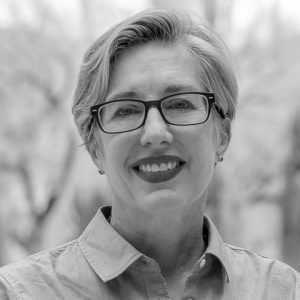
Pamela Hieronymi is a Professor of Philosophy at UCLA. She has published on moral responsibility and on our control over our own states of mind. She is currently bringing these two strands together into a book, Minds Matter, in order to unwind the traditional problem of free will. In addition to her academic publications, Hieronymi has been a guest on a number of podcasts, her thoughts technology and teaching were published by The Chronicle of Higher Education, and she has served as a consultant for NBC’s sitcom, The Good Place.
abstract
Much of the philosophical discussion about the interaction between theoretical and practical reasoning, or, as I will put it, between prediction and decision, tends to focus on what I will call the unhappy cases: cases of apparent irrationality, irresponsibility, or bad faith. One familiar character is Professor Procrastinate, who predicts that, due to his inveterate procrastination, he will not write the review he otherwise has strong reason to write. I would like to consider, instead, the happy cases: cases in which you predict you will do what you have strong reason to do. I hope thereby to better locate what has gone wrong in the unhappy ones. My ultimate quarry is the idea that prediction and decision, or theoretical and practical reasoning, are somehow isolated from one another, that they take place in different “standpoints,” such that moving between them involves a shift in “point of view,” and any attempt to combine them is somehow illicit or a sign of bad faith. The idea is inherited from Kant, who sought to render science and human freedom compatible by arguing that the activity of the rational will cannot be known by the methods of science. Kant was addressing the problem of free will by appeal to transcendental idealism and in-principle mystery. But the contemporary legacy of Kant’s thought, in the metaphor of standpoints, leaves the idealism behind and extends to other contexts, where it brings more confusion than clarity. Or so I hope to suggest.
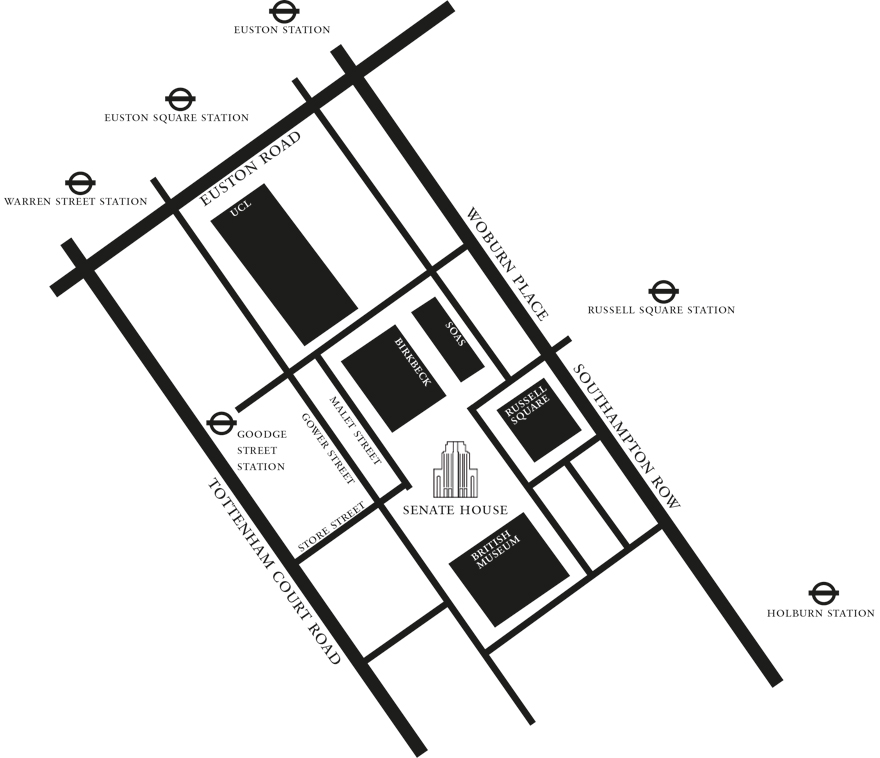
Our meetings usually take place in Senate House, University of London, Malet St, London WC1E 7HU. See top of page for specific location.
meeting time
The Society’s philosophy talks take place every fortnight on Mondays throughout the academic year. Each talk starts at 18.15 and lasts for 45 minutes. The remainder of the time is dedicated to discussion, which ends at 19.45
Catering
All of the Society’s philosophy talks are catered with fairtrade teas, coffees, and biscuits.
Admission
In line with the Society’s mission to make philosophy readily available to the general public, all talks are free and membership is not required.
Draft Papers
Following over a century of tradition, draft papers for all the talks are available in advance. Please note that draft papers can only be cited with the authors permission (see below for final publication and subscription details). The draft paper for a talk is available approximately one week prior to its schedule delivery.
Final Papers
For the past 142 years, the Proceedings has featured widely respected papers delivered by a range of prominent philosophers, such as Alfred North Whitehead, Ludwig Wittgenstein, Bertrand Russell, A.J. Ayer, P.F. Strawson, Karl Popper, Elizabeth Anscombe, Bernard Williams, Hubert Dreyfus, Alexander Nehamas, and Onora O’Neill. Final drafts of the papers – including discussion notes and exemplary graduate papers – are published in the Proceedings of the Aristotelian Society.
Accessibility
The venue at Senate House is wheelchair accessible and there are disabled toilet facilities on the ground floor. If you require a disabled parking space, or a hearing loop, please contact anna.stelle@aristoteliansociety.org.uk in advance, so that we can reserve these for you. Service animals are also welcome.